MOSS-Image SFT vs Base: Differences, Quality and Use Cases
The short answer: SFT is for finished images, Base is for fine-tuning. Both share the same architecture and inference pipeline, so the choice is about post-training, not a different API.
What is verified — and what is not
OpenMOSS publishes a qualitative comparison: SFT produces clearer text grouping and a more organized whiteboard layout. It does not publish a numeric Base-vs-SFT benchmark, nor the prompt, seed or sampling settings behind the comparison images. Do not treat the images below as a controlled A/B benchmark.
01 / Official comparison
The same scene, two checkpoints
Both images come from the official MOSS-Image repository. The model version is the only documented difference.
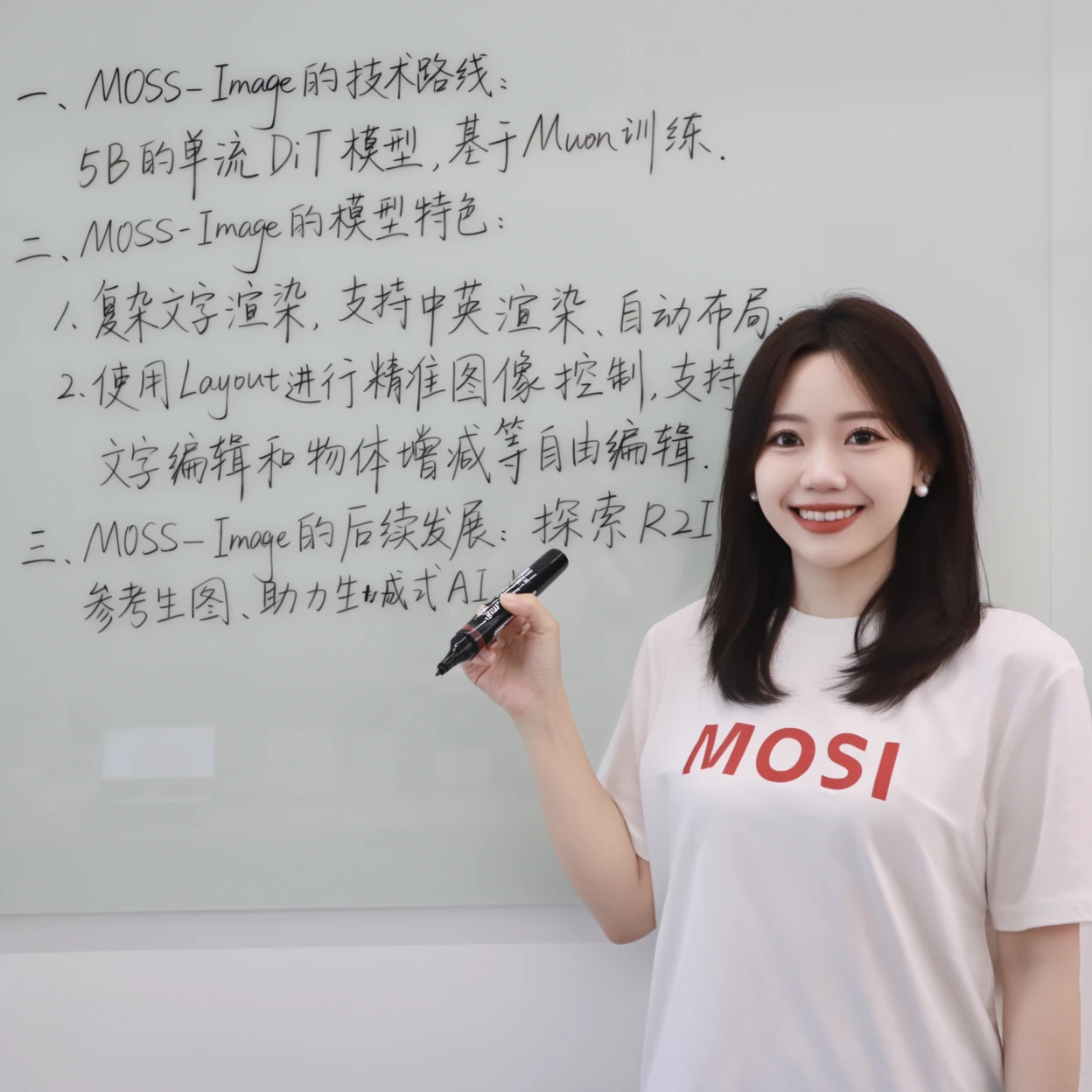
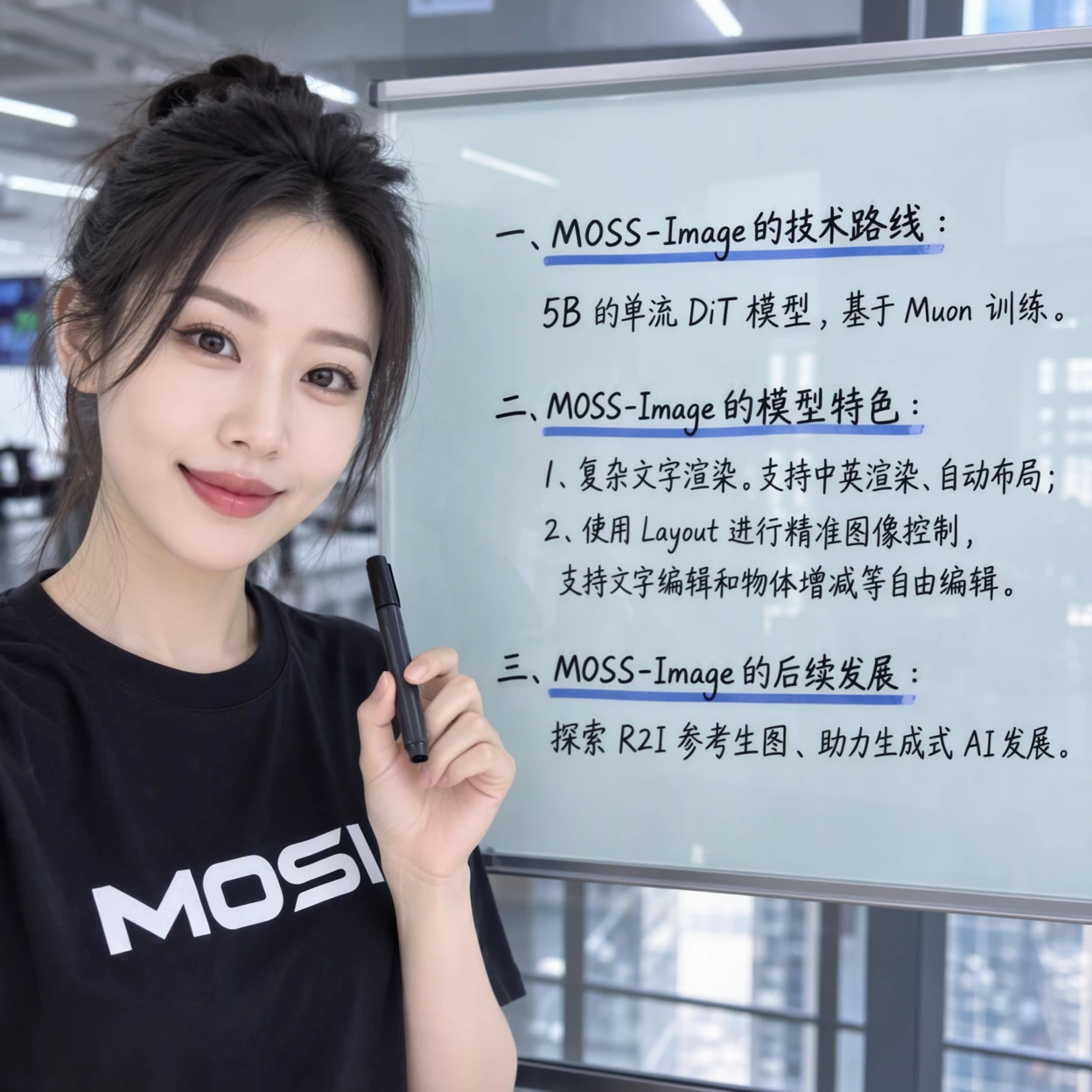
Images: OpenMOSS Team, MOSS-Image, Apache-2.0, github.com/OpenMOSS/MOSS-Image.
02 / Documented differences
What actually changes
The architecture and sampling defaults are shared. The difference is the training stage and the intended workflow.
| Dimension | Base | SFT |
|---|---|---|
| Architecture | 5B DiT + Qwen3.5-9B + FLUX.2 VAE | Same |
| Post-training | None; no CFG distillation | Supervised fine-tune of Base |
| Intended use | Fine-tuning, LoRA, research | Finished, presentable images |
| Official examples | All 20 repository examples | No separate gallery published |
| Sampling defaults | 50 steps, CFG 3, shift 5, Euler, layer-22 skip | Same pipeline and defaults |
| SGLang validation | Validated in the cookbook | Checkpoint not validated there |
| vLLM-Omni | Supported | Supported |
03 / How to choose
Three questions
- Do you need a finished image today? Use SFT. It is the checkpoint behind the hosted MossImage generator and the safer default for posters, menus and ads.
- Do you want to train a style or character? Start from Base. Keep the text encoder frozen, and treat the published Base weights as the starting point rather than the SFT output.
- Are you building a pipeline? Both checkpoints expose the same interface, so you can prototype with SFT and swap in Base for fine-tuning without changing the surrounding code.
04 / Next step
Pick your path
05 / FAQ
Base vs SFT FAQ
What does SFT mean here?
SFT means supervised fine-tuning. MOSS-Image-SFT is trained from Base on curated data; it keeps the same architecture and inference interface, but is tuned for finished, presentable images.
Which version is better for text rendering?
The official comparison says SFT produces clearer text grouping and a more organized layout. OpenMOSS has not published a numeric benchmark for this pair, so treat that as a qualitative statement rather than a measured score.
Can I fine-tune the SFT version?
The official guidance points to Base for post-training and LoRA. Base is released without post-training or CFG distillation, which preserves more of the training information for fine-tuning.
Which one should I download?
Download SFT if you want to make finished posters, menus or ads. Download Base if you plan to train a LoRA, adapt the model, or study the raw checkpoint.
Do both run in ComfyUI?
Comfy-Org publishes bf16 and int8 repacks for both checkpoints, and the same ComfyUI node loads either one. Point the loader at the matching model directory; do not mix the text encoder or VAE from a different bundle.